“Our job is not only to explain the cliff. It is to help people learn how to fly.”
For years, individuals with ADHD have struggled to make sense of a life that never seems to run as smoothly as it should. They may be bright, capable, creative, funny, intense, and deeply driven, yet still find certain tasks difficult, even though others handle them almost automatically. They might excel in one area and then falter significantly in another. They can swing between suffering and triumph, shame and hubris. One day, they feel unstoppable. Next, they are overwhelmed by forgotten tasks, emotional overload, missed deadlines, and the quiet humiliation of being unable to hold everything together.
Then comes the wait for help.
In many regions of the UK, adults with ADHD experience lengthy waits for diagnosis. Even after diagnosis, individuals often face further delays in medication titration, with limited access to structured non-pharmacological support afterwards. Current pathways remain heavily focused on assessment and pharmacotherapy, with little emphasis on cognitive rehabilitation, nutritional support, skill rehearsal, or neuroplasticity-informed approaches.
And that is where many people hit a second kind of cliff edge.
Because diagnosis matters. Medication matters. But for many, the experience remains similar: after years of struggling, someone finally explains why flying has always been difficult, hands you a pair of wings, and then gently pushes you off the edge with very little harness, training, or follow-up.
The message is: now you know what it is. Off you go.
But what if the real question isn't whether someone with ADHD can fly? What if the real question is whether we have prepared them properly?
A diagnosis can be life-changing. It can bring relief, recognition, and a new narrative after years of difficulty. Medication can also be transformative. For some, it helps cut through mental fog, improves focus, and creates space to function more effectively.
However, medication does not teach a person how to establish routines. It does not automatically enhance planning skills. It does not restore confidence. It does not erase years of negative self-belief. And it does not, on its own, help someone rebuild a mind shaped by repeated frustration, inconsistency, or failure.
If we want people with ADHD not just to survive, but to thrive, our support cannot stop at identifying the problem and treating one part of it. We have to think about preparation.
This is where neuroplasticity becomes significant.
For a long time, the brain was considered largely fixed. However, thinkers like Dr Norman Doidge helped highlight a different idea: the brain can change. It is capable of adapting. It can reorganise. It can create new pathways through repeated experience and practice.
A simple way to visualise this is as a field of tall grass. The first time you walk through it, the grass resists you. There is no path. You have to push through. The second time, it is slightly easier. The more often you walk that same line, the clearer the path becomes. In time, what once felt effortful becomes the natural route.
The brain functions similarly. Repeated thoughts, behaviours, and responses strengthen certain pathways. Useful routines can become easier to perform. New habits can become more automatic. However, the opposite is also true. If someone repeatedly encounters chaos, criticism, emotional overload, avoidance, or failure, those patterns can also become well-worn routes.
That is why ADHD is rarely just about attention. It also involves self-belief, habits, emotional responses, coping strategies, and the routines the brain has been compelled to follow for years. The hopeful part is this: paths can change.
Currently, much of ADHD care in the UK still follows a limited sequence: wait, be assessed, receive a diagnosis, try medication, then hope things improve.
For many patients, that is not enough. Insight is not the same as skill. Clarity is not the same as capacity. And being told why something has been hard is not the same as being supported to do it differently.
This is where we need to broaden the conversation. Not away from diagnosis. Not against medication. But beyond them.
We should consider how we assist individuals with ADHD in strengthening the core skills required for daily life: attention, working memory, planning, self-regulation, response inhibition, emotional stability, and cognitive flexibility. In other words, how do we help people forge stronger pathways through the grass?
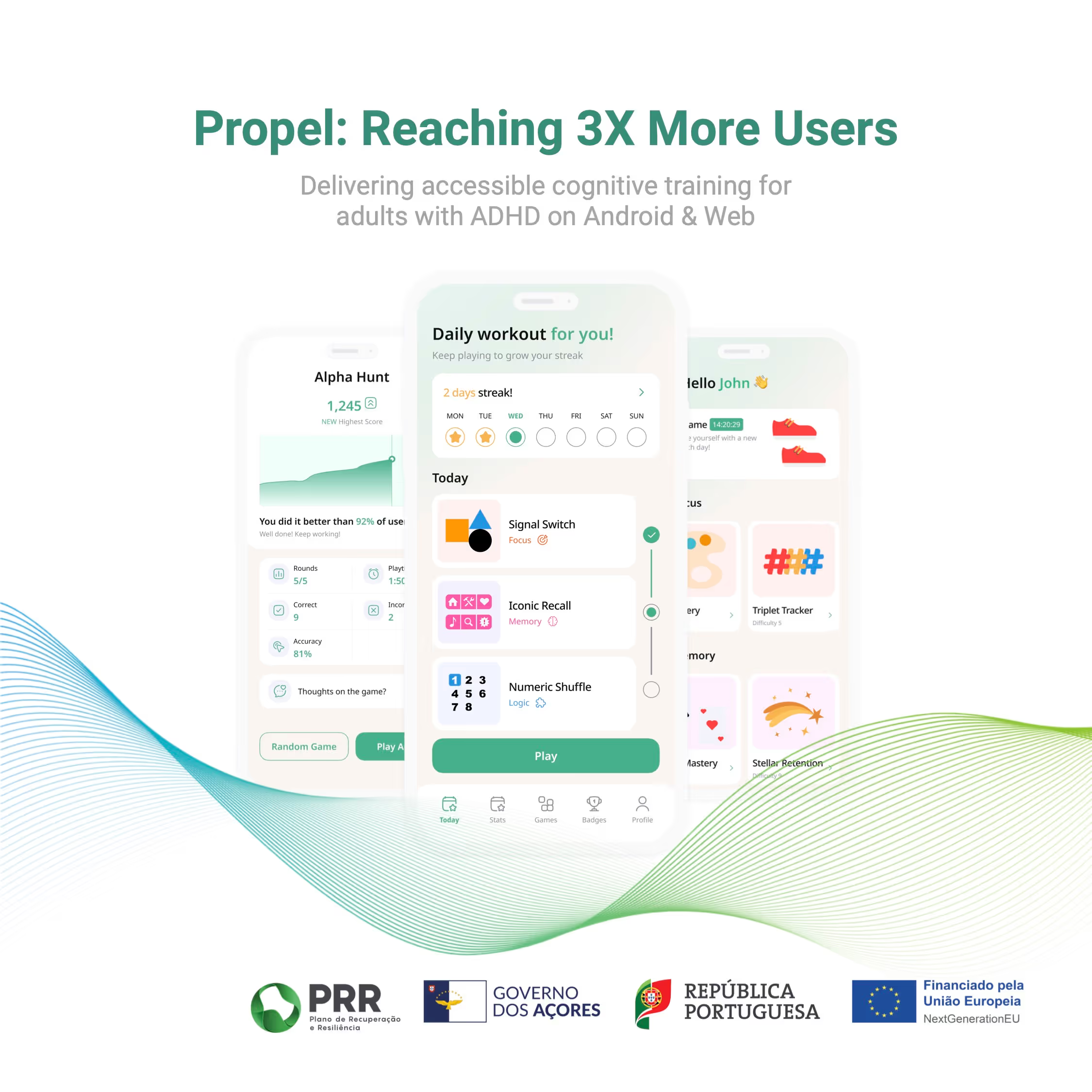
This is the thinking behind Propel.
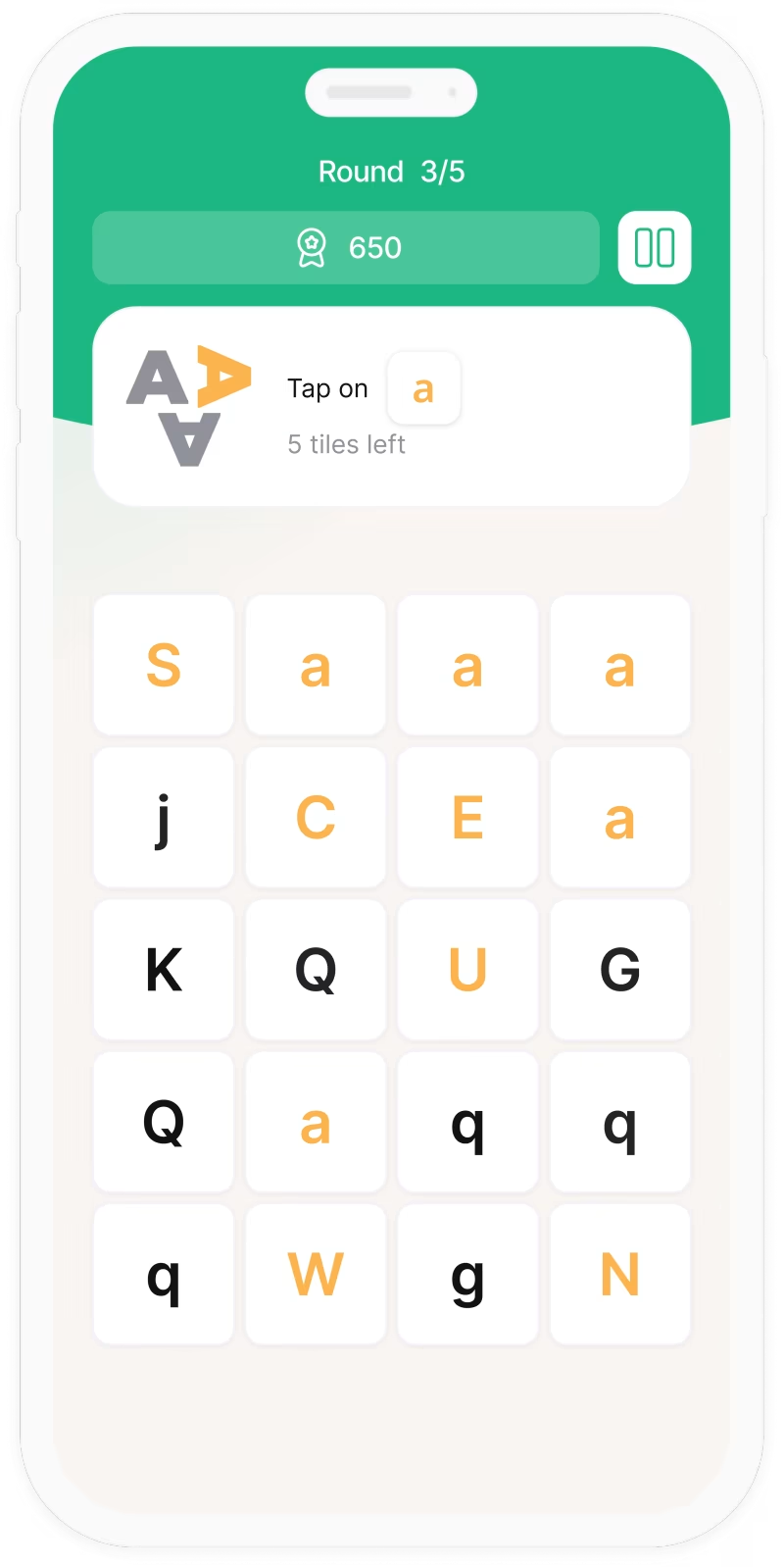
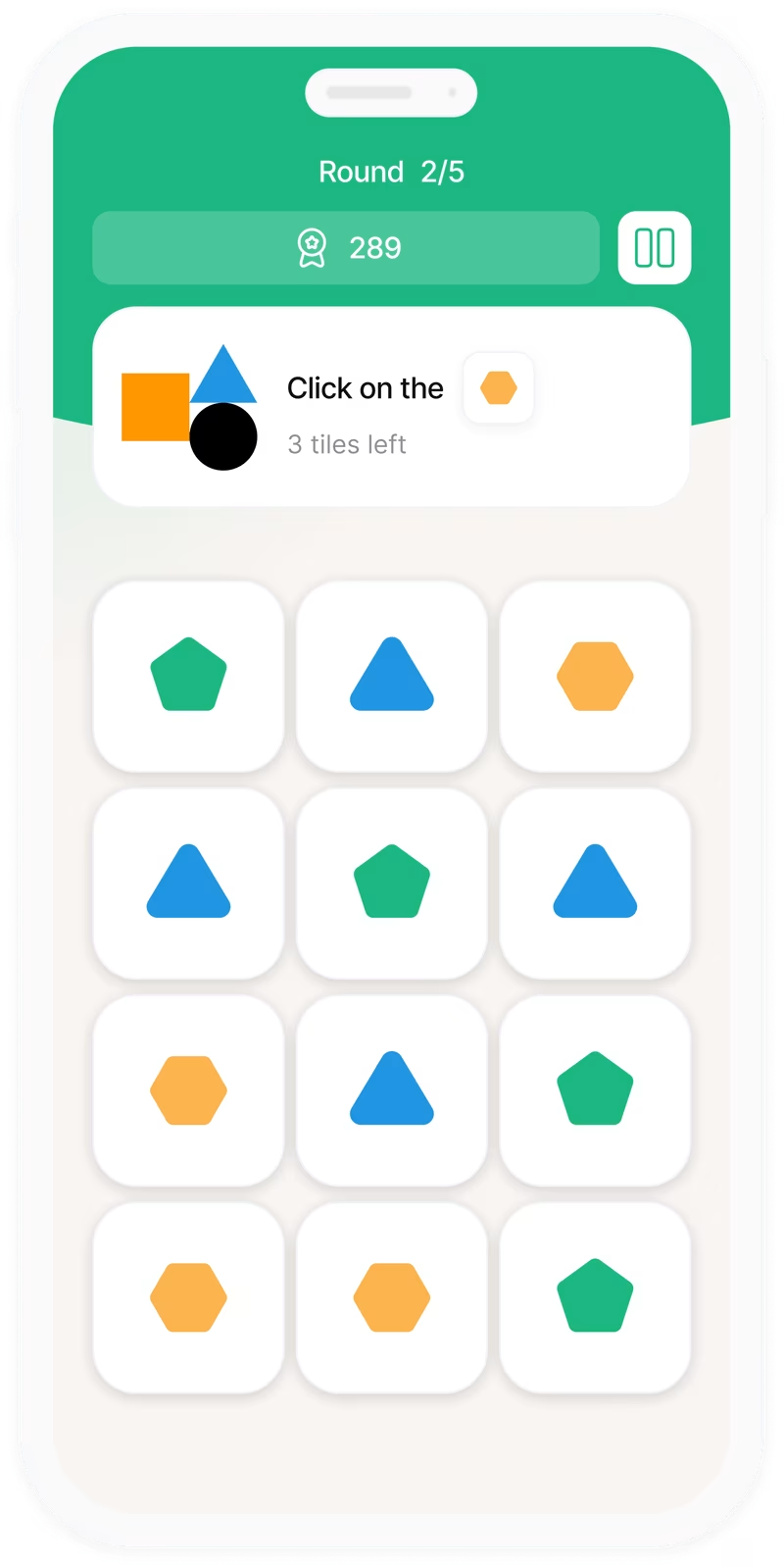
Propel is a self-guided brain training app for adults with ADHD, designed around short, gamified sessions that target functions commonly affected by ADHD, including sustained attention, response inhibition, impulse control, task switching, working memory, processing speed, planning, and emotional regulation. Its theoretical foundation is based on neuroplasticity: the concept that repeated cognitive activity can help strengthen underused attentional and executive pathways over time.
This is not about claiming a cure. It is not about replacing medication. And it is not about presenting cognitive training as a standalone treatment.
It is about asking whether repeated, structured, accessible cognitive practice might serve as a useful adjunctive tool within a broader package of care. That is a fair and important question.
In our internal 30-day evaluation, adults with an established ADHD diagnosis were given access to Propel ADHD Pro and completed baseline and follow-up ASRS symptom ratings. Participants used the app in a naturalistic way, without mandated session targets, so the evaluation reflected real-world engagement rather than an artificial research environment.
The findings were encouraging, albeit preliminary. Over the 30-day period, most participants showed reductions in total ASRS scores, with the mean total ASRS score reducing by around 24 points. Improvements were observed in both inattentive and hyperactive-impulsive symptom domains. The proportion meeting the ASRS Part A screening threshold reduced from 9 out of 11 at baseline to 4 out of 11 at follow-up.
At the same time, the report remains appropriately cautious. This was an observational internal assessment with a modest sample size, no control group, and self-report outcomes only. Expectancy effects, regression to the mean, and the influence of concurrent supports cannot be dismissed. The results are indicative rather than definitive.
Recognising limitations is crucial. It's not about exaggerating but about fostering honest and practical clinical discussions.
The evaluation also revealed another aspect that seems very relevant to real ADHD care: individuals interacted with the app in various ways. Usage was inconsistent. Focus and Memory games were used most frequently, while engagement with other areas differed. Exploratory analysis suggested that increased use of certain areas sometimes correlated with improvements in related symptoms, but these were only descriptive observations, not definitive causal conclusions.
That variability is not surprising. People with ADHD do not live in neat laboratory conditions. They live in real lives: messy lives, pressured lives, interrupted lives. Any useful support must make sense within those contexts.
This is why clinicians and service leaders must carefully consider what we offer. Are we just diagnosing ADHD and treating it? Or are we supporting individuals to develop the mental resilience they need to function more independently over time?
Because many patients do not only need symptom relief, they need scaffolding. They need repetition. They need better habits. They need emotional resilience. They need practical ways of strengthening the functions they rely on every day. That is where adjunctive approaches may hold real value.
A better approach to ADHD care would not dismiss diagnosis or medication. It would provide a complete picture.
It would recognise that medication may create the mental space for change, but that many people still need structured support to develop what comes next.
It would focus on preparation, not just identification. Training, not just explanation. Support, not just access.
Imagine if every person diagnosed with ADHD was also offered a more considerate next step: a clear explanation of their profile, practical strategies, psychoeducation, and structured supplementary tools that help develop attention, memory, planning, inhibition, and emotional regulation over time.
That would feel less like being pushed off a cliff and more like being harnessed, guided, and properly prepared for the flight.
The internal Propel report concludes cautiously and appropriately: Propel appears best positioned as a scalable, self-directed adjunct within contemporary ADHD care pathways, particularly alongside existing clinical support, and the findings justify more rigorous future evaluation.
That, to me, is exactly the right framing. Measured. Hopeful. Useful.
Because ADHD support should not end with diagnosis. And it should not rely too heavily on medication alone. It should help people build the path, not just point to it.
If we want individuals with ADHD to thrive, then we need to think beyond simply naming the difference. We need to think about how we prepare them to live with it well.
Our job is not only to explain the cliff. It is to help people learn how to fly.
To read the internal evaluation report, click here.

Whether you're here to focus better, calm your mind, or just feel a little more in control, we’re here to support you. One game at a time.