We've all heard how staying physically active is important if you want to get stronger, fitter and overall live a healthier life. In fact, if you have ever practiced sports regularly, then you have probably seen the gains firsthand:
- One day you started lifting 5 kg and now you’re suddenly lifting 8.
- You used to struggle to run 2 miles and now you can run 4 effortlessly.
- You couldn't bike or swim for long without getting out of breath, and now you feel like you could keep going for hours.
Well, your brain is not any different…
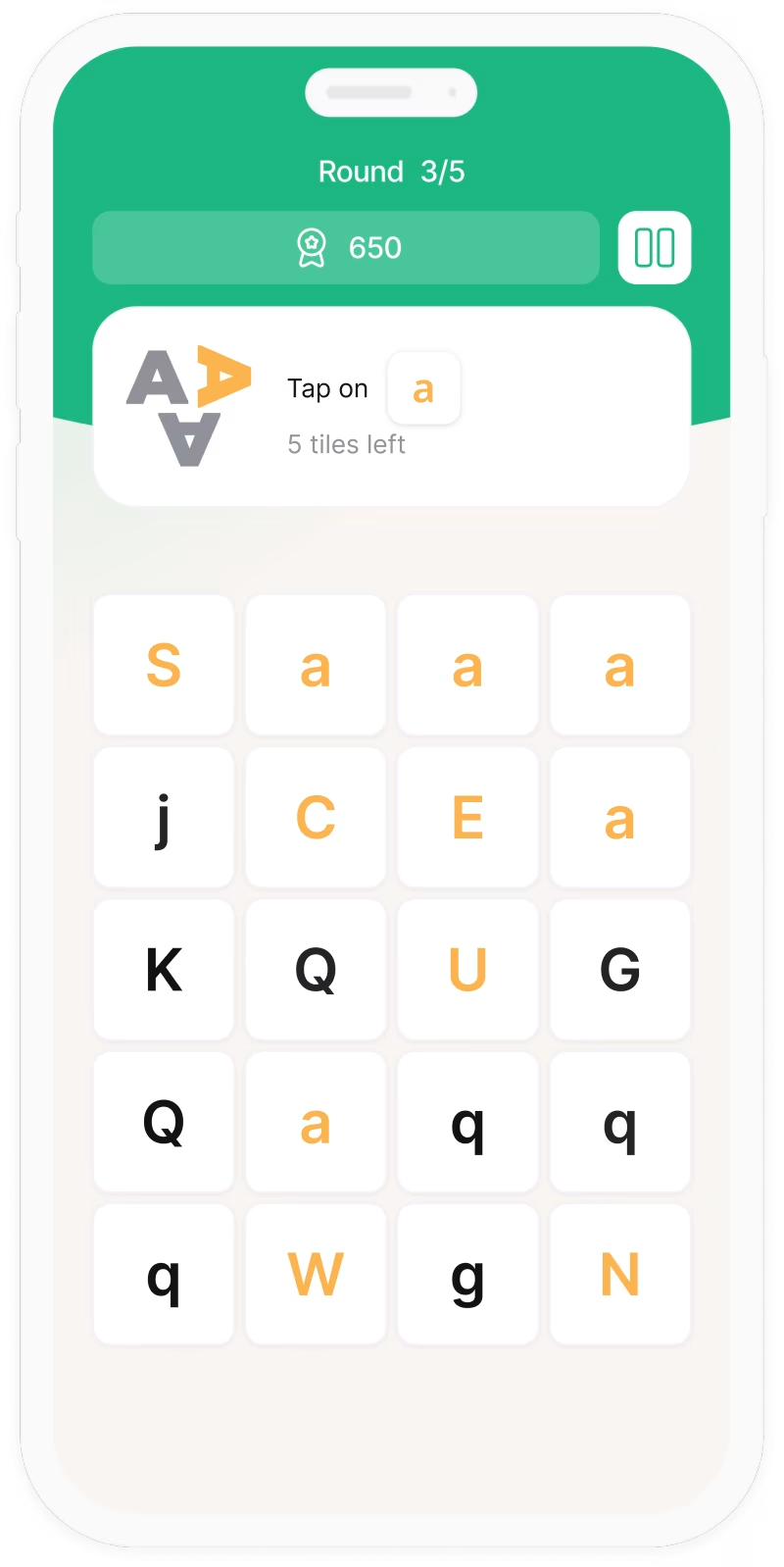
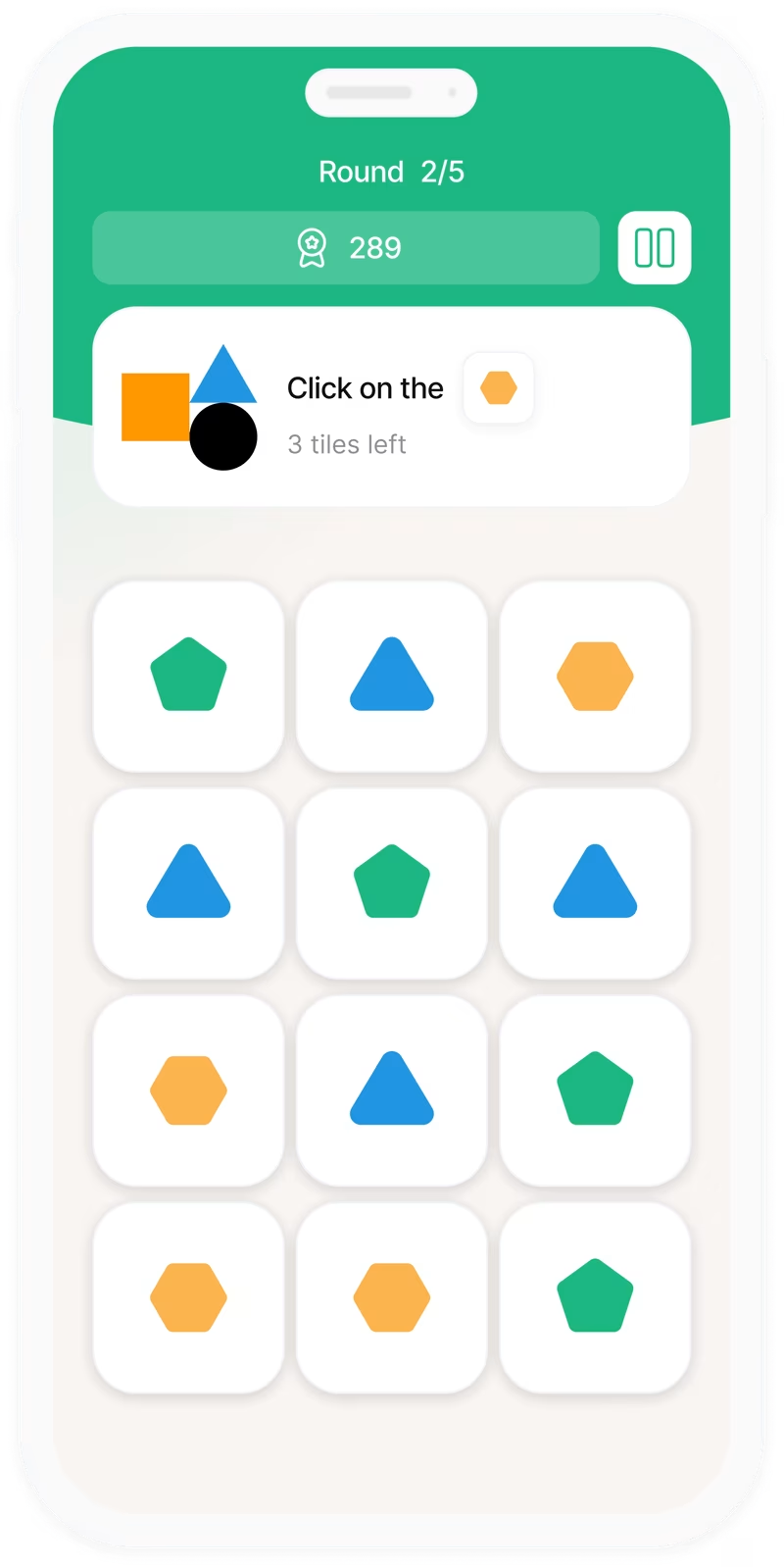
Cognitive training is, in simple terms, a gym for your brain. These are activities or games designed to target specific brain regions and mental processes. Their goal is to strengthen abilities such as attention, memory, processing speed, or self-control by repeatedly engaging the neural pathways involved in these skills. As you improve, the tasks automatically adjust in difficulty, providing a progressively challenging "workout" for your brain [1].
Although medication can effectively reduce some ADHD symptoms, it doesn't necessarily improve cognitive skills such as working memory or inhibition. On the other hand, cognitive training was developed to target and strengthen these areas that meds may not fully reach, especially in clinical populations [2].
Yes, there's good evidence that cognitive training can help individuals with ADHD improve certain cognitive processes, such as attention and/or working memory (the process that allows you to temporarily hold and manipulate information during ongoing tasks), which can in turn enhance performance in academic areas like reading or math [1].
A few years ago, if someone had said you could use a digital tool to improve your ADHD symptoms, it would have sounded unrealistic, not to mention that accessing cognitive training programs was often difficult due to less availability to digital resources (e.g. phones, tablets, etc.).
Today, however, we have a wide range of digital interventions available, from mobile apps to virtual reality, and a growing body of evidence showing that these tools can meaningfully support people with ADHD, whether by offering cognitive training, self-monitoring features, diagnostic support, and more.
For example, a review of existing evidence on the matter found that video game based interventions have been well accepted and effective in improving cognitive areas and decreasing ADHD symptoms [3]. This aligns with other research showing that game-based interventions can improve visuospatial working memory as well as inattention and hyperactivity symptoms [4] [5].
If you've never tried cognitive training through games before, this might be the perfect moment to start: they're engaging, intuitive and can easily fit into your daily routine.
Lastly, please remember that although cognitive training is a powerful tool for improving cognitive abilities, it should complement and not replace other essential interventions such as therapy, professional assessment, or medication when needed.

Whether you're here to focus better, calm your mind, or just feel a little more in control, we’re here to support you. One game at a time.