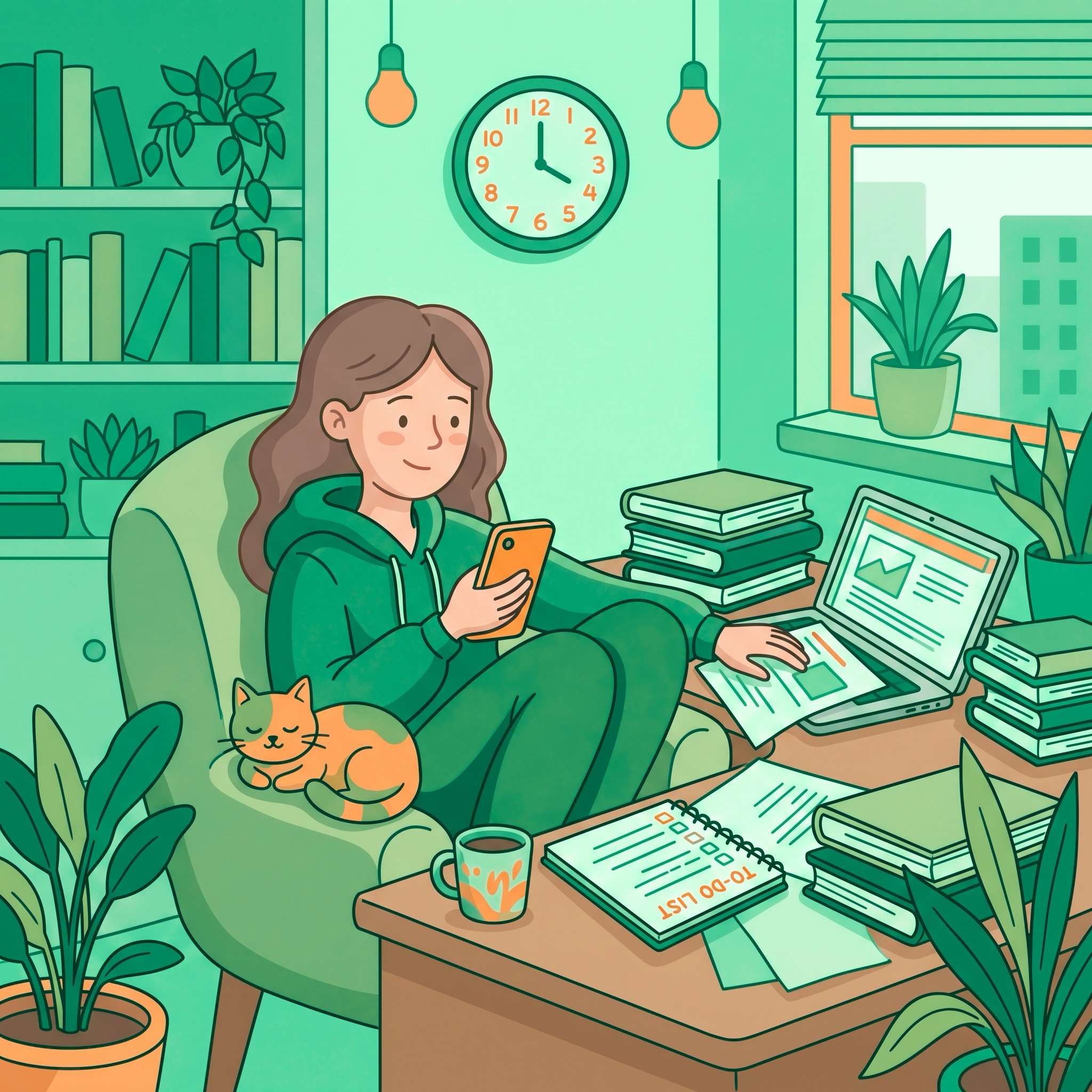
Has it ever happened that you are so hyperfocused on a project that you don't blink and realize it's 4 PM already, and you have eaten nothing? Or you gulped down glass after glass of your favorite smoothie, completely losing count? Or maybe you've found yourself putting that one sauce on chips, in salad, on pasta, and literally everything that crosses your plate, only to wake up one day and realize you never want to see it again? If this rings a bell then brace yourself to explore how ADHD affects your eating habits and behaviours.
ADHDers are more likely to develop eating disorders and one in four adults with ADHD experience significant binge or emotional eating patterns [1]. 26% of people with ADHD also experience binge eating disorder behaviors, compared to just 2% without ADHD [5]. Studies show that adults with ADHD are more likely to eat in response to emotion rather than hunger, using food to regulate anxiety, frustration, or low mood [2].
This makes sense as your brain has issues with dopamine regulation, and guess what? Food, especially sugary or high-fat foods, delivers a fast dopamine surge, temporarily soothing the under-stimulated brain [3]. In fact, scientists have found that the brain circuitry releases dopamine twice per meal, once you ingest the food and then when it reaches the stomach [4]. For ADHDers it isn't always about binge-eating or overeating, they also tend to forget to eat or develop an obsession with certain foods.
ADHD-related eating challenges vary widely and often involve a distinct combination of unhealthy habits and patterns, which means no two individuals experience them in exactly the same way. Below are some of the more common, yet unhealthy, eating patterns associated with ADHD, while you read try to identify the ones you have:
The Bottom Line
According to a recent review of existing research, unhealthy dietary patterns are associated with ADHD symptomatology, whereas healthy dietary patterns can help in the management of symptoms [7]. It is important for ADHDers to monitor their dietary intake, make healthy modifications, and be mindful of unhealthy eating habits before they become pathological. Remember for ADHDers: Stable blood sugar, stable mood.

Whether you're here to focus better, calm your mind, or just feel a little more in control, we’re here to support you. One game at a time.