Why ADHD Brains Collect Clutter and How to Defeat Decision Paralysis

Sara Haqqi
July 16, 2026

3min read

You buy supplies for a new hobby, use them once, and they live in a corner forever.

You keep "just in case" items such as empty boxes, old cables, broken gadgets you swear you'll fix, some day….

You have 6 half-finished craft projects because starting is exciting, but finishing is hard.

Your hobbies don't just take up time, they take over entire rooms. 

You feel crushing guilt at the thought of throwing anything away 

If you are nodding along, you're not alone. ADHD and hoarding go hand in hand. 

What's Happening Here? 

Research shows that ADHDers are more likely to exhibit clinical levels of hoarding behavior compared to neurotypical individuals [1]

The ADHD brain struggles with three things that directly feed hoarding:

  1. Possibility thinking:  Your brain sees 10 creative uses for an empty jar before a neurotypical person considers recycling it . What looks like junk to others looks like potential to you.
  1.  Decision paralysis: Every item triggers a cascade of questions: Keep? Donate? Trash? What if I need it later? The mental energy required to decide is so high that doing nothing feels safer. 
  1. Out of sight, out of mind: Many people with ADHD rely on visual memory to remember that things exist. If you put it away, does it disappear from your brain entirely? That fear drives the piles. 

But the irony is, clutter actively worsens ADHD symptoms. A 2023 study found that clutter increases working memory load, filling your mind before you even start a task [2]. This is called cognitive overload, which becomes an obstacle to focus [3]. Yet another study suggests that executive function deficits, particularly in categorization, decision-making, and sustained attention [4], form the bridge between the two conditions. 

The Gentle Solution: Cognitive Training

Traditional decluttering advice, "just throw it away", ignores how your brain works. That's where cognitive training comes in. As mentioned earlier, hoarding in ADHD is inextricably linked to problems with categorization, sustained attention, and decision-making, training these three areas might help. 

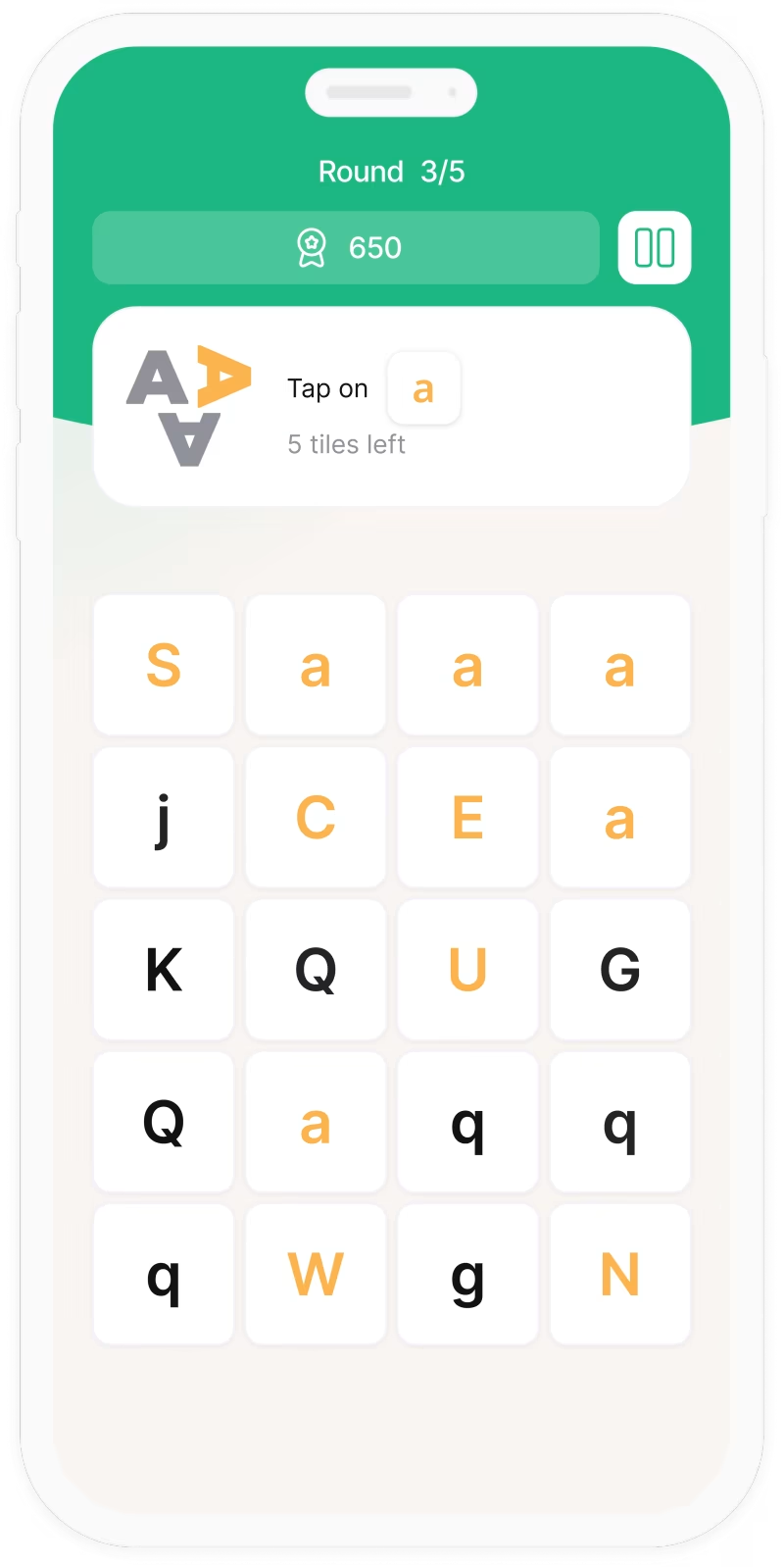
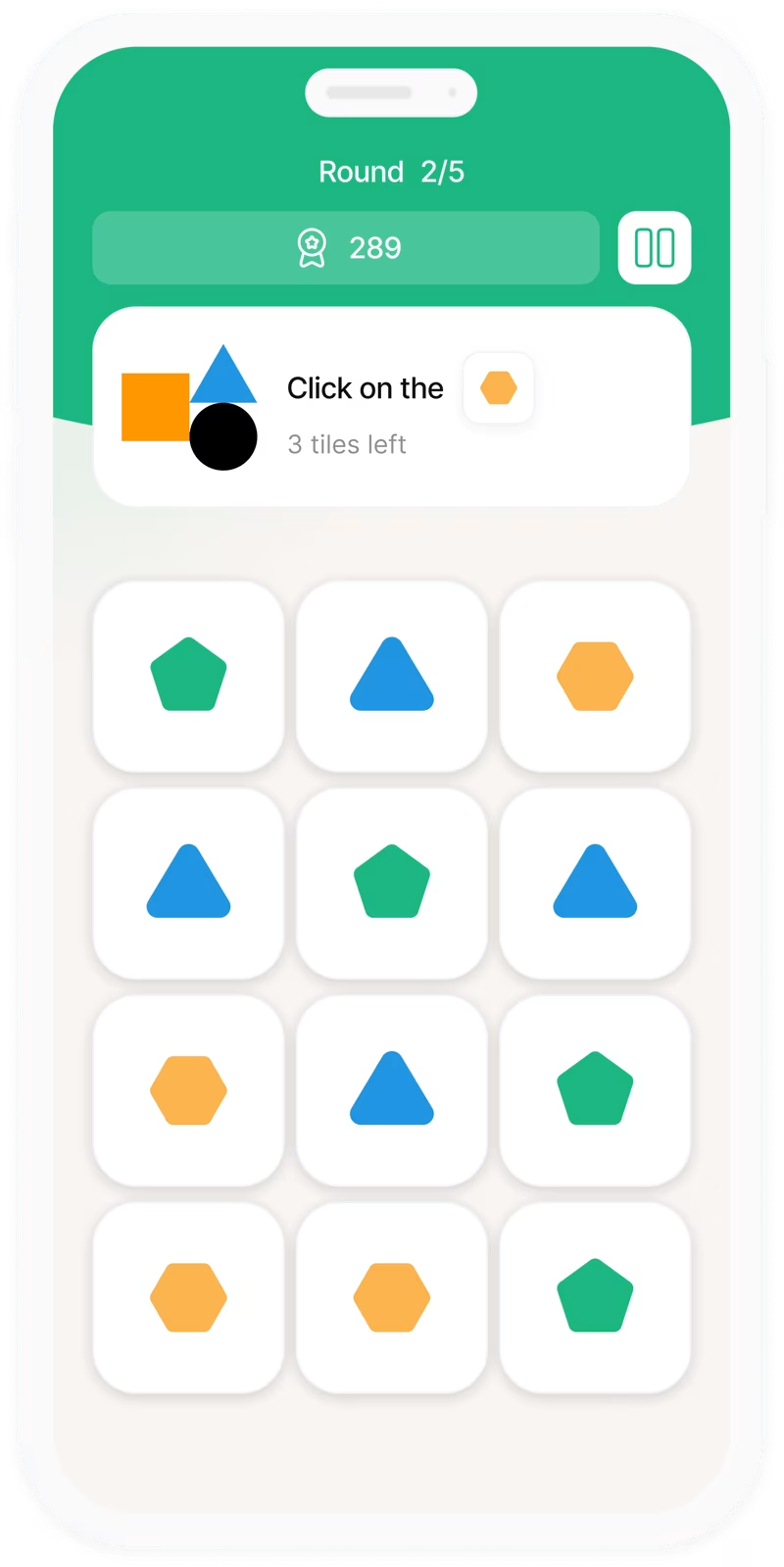
  • Decision-making skills: Decision paralysis strikes when the ADHD brain sees every object as equally important and every choice as a high-stakes gamble, while the hoarding brain amplifies this into an agonizing fear of making the wrong call. Cognitive training gently rewires this response by making you learn how to break decisions into micro-steps and make quick snap choices.

Key Takeway

By practicing small, low-stakes decisions repeatedly, you teach your brain that letting go doesn't equal danger. You don't need more willpower. You need better brain habits. And those can be learned. One tiny choice at a time.

Share this post
Sara Haqqi
Scientific Advisor

Gain control over your cognitive hurdles

Whether you're here to focus better, calm your mind, or just feel a little more in control, we’re here to support you. One game at a time.
Related posts

Liked this article? You might also enjoy these related posts!

Can ADHD Cause Depression? What the Research Says

Living with ADHD raises your risk of depression, but it isn't inevitable. Learn why the two are linked and four research-backed ways to protect your mood.
Learn more

Why ADHD in Women Gets Missed for Decades and What Changes in Midlife

The systemic underdiagnosis of women with ADHD stems from internalized symptoms and compensatory masking that inevitably break down during major hormonal shifts, transforming hidden executive strain into adult burnout.
Learn more

Processing the Emotional Fallout of a Late Adult ADHD Diagnosis

A late adult ADHD diagnosis frequently triggers a complex, non-linear grief for what "could have been," requiring individuals to move from self-blame to identity reconstruction through neurodivergent-affirming therapy, community, and radical self-compassion.
Learn more

How to Break the ADHD Anxiety Loop and Calm Your Nervous System

While ADHD does not directly cause anxiety, its core executive deficits and the cumulative trauma of navigating negative social feedback create a persistent anxiety loop that can be dismantled through self-awareness, lifestyle adjustments, and targeted digital supports.
Learn more

Why ADHD Brains Crave Food Fixations and How to Master Your Eating Patterns

Because the ADHD brain uses food as a dopamine-seeking tool for stimulation and emotional regulation, individuals often experience unique patterns like "hyperfocus blackouts" or "food fixations" that require external structure and sensory alternatives to manage.
Learn more

How ADHD Fuels Imposter Syndrome and Ways to Reclaim Your Worth

ADHD imposter syndrome is a deeply ingrained response to a lifetime of performance gaps and negative feedback, requiring a shift from internalizing criticism to practicing radical self-compassion and objective reality checks.
Learn more

Why Your ADHD Brain Feels Foggy and How to Break the Haze

ADHD brain fog is a physiological state of cognitive dysregulation, often linked to Sluggish Cognitive Tempo, that requires sensory anchoring and nervous system reboots rather than increased willpower to clear.
Learn more

How to Unlock ADHD Creativity and Turn Divergent Thinking into a Strength

ADHD is far more than a set of deficits, it is a distinct cognitive style where enhanced divergent thinking and original perspective-taking can be transformed into a personal and professional superpower.
Learn more

Building a Dopamine Bridge for ADHD Motivation

ADHD motivation isn't a lack of willpower but a neurobiological preference for immediacy and novelty, where gamified rewards act as a "dopamine bridge" to help the brain initiate and sustain effort on less-stimulating tasks.
Learn more

Why ADHD Can Make Love Feel So Complicated

ADHD affects far more than productivity, it can deeply shape how people connect with others. From managing emotions and remembering important details to masking symptoms and fearing stigma, ADHD can make building and maintaining relationships uniquely challenging.
Learn more

Navigating Romantic Relationships as an ADHDer

Romantic relationships with ADHD can feel like a dance where the rhythm keeps shifting, full of love and passion, yet often marked by frustration and misunderstanding. Forgetfulness, emotional intensity, and inconsistent attention aren’t signs of disinterest, but reflections of how ADHD brains process emotion, time, and connection differently.
Learn more

ADHD Struggles in Social and Romantic Relationships

ADHD can make social and romantic relationships feel like an uphill climb, with forgetfulness, impulsivity, and emotional intensity creating challenges, but also with passion, creativity, and spontaneity bringing unique strengths.
Learn more

ADHD Struggles at Work

A deep dive into the unique challenges adults with ADHD face in the workplace, from structure and burnout to hyperfocus, criticism, and the rise of virtual meetings.
Learn more

Fighting an Invisible Battle of Getting Things Done

A look at the unique productivity struggles adults with ADHD face, and how to work with your brain, not against it.
Learn more